Specializations
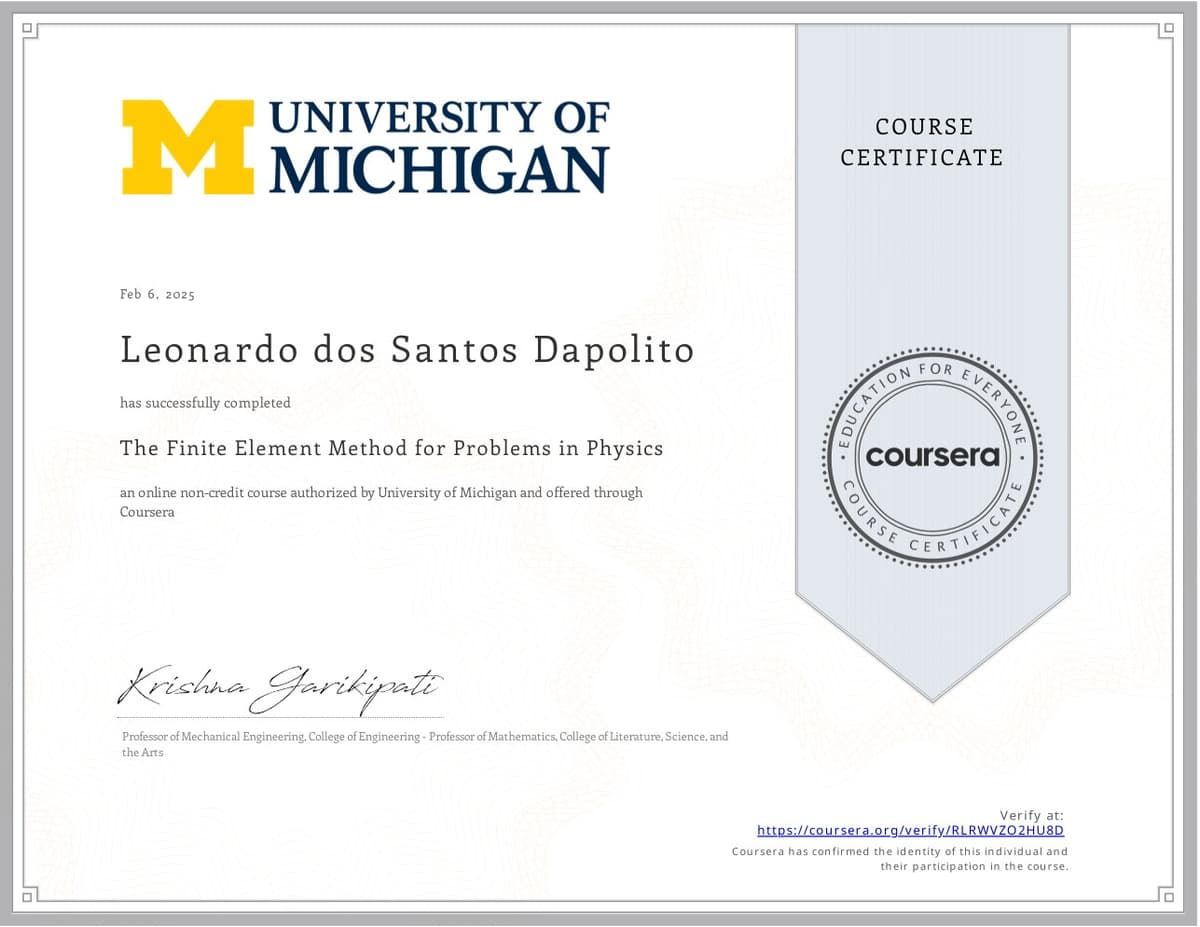
I have always considered myself a lifelong learner. Driven by a constant desire to deepen my knowledge, I began pursuing several specialisations and courses from 2024 onwards. With the democratisation of online education, I had the opportunity to explore programmes such as the University of Michigan’s Finite Element Analysis course, where I strengthened core concepts and developed simulations applied to fluid mechanics and structural analysis. I also completed courses in machine learning and data analysis applied to motorsport, and it was within this context that the idea of tackling a recurrent problem in Formula SAE emerged: premature tyre wear. This was the starting point of the Tyre Manager project.
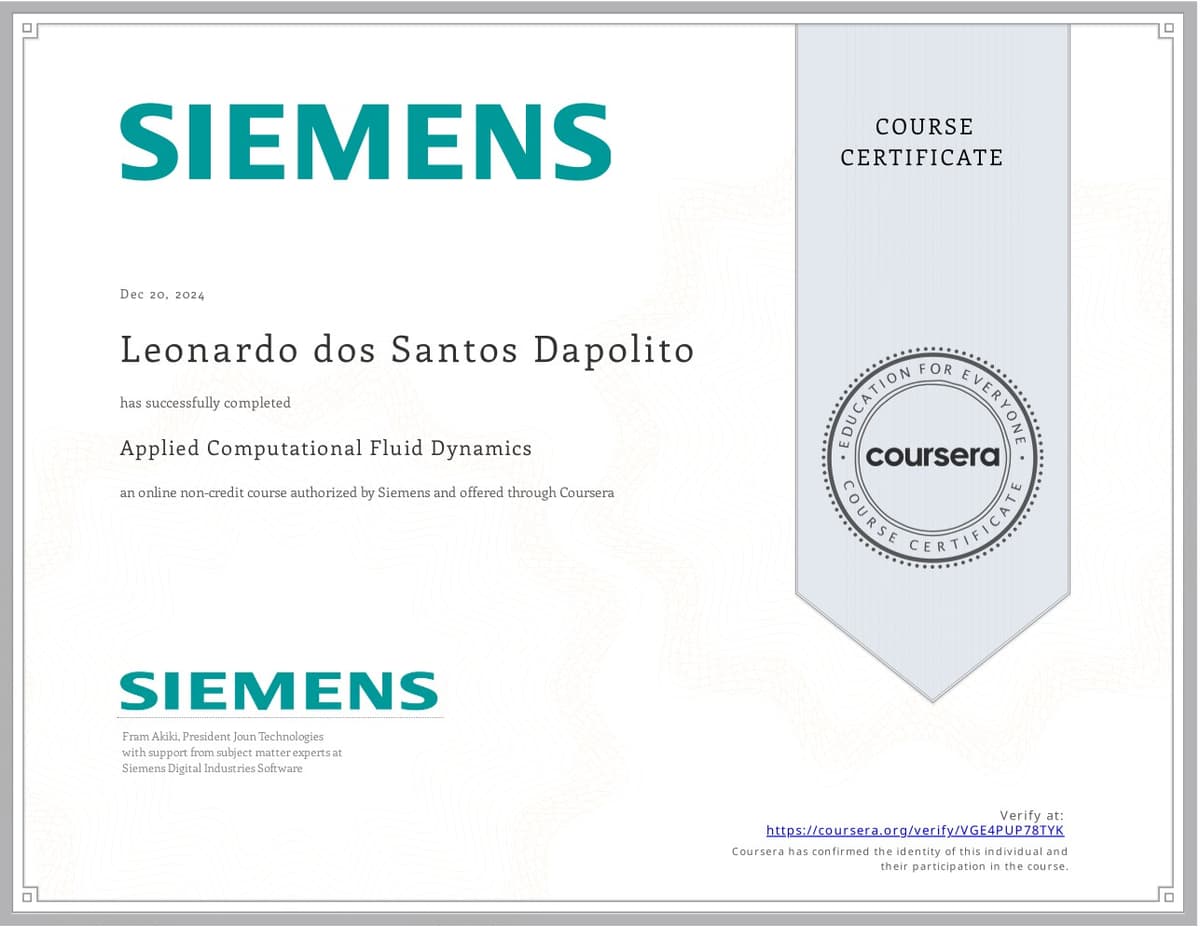
Despite exploring various fields, I never distanced myself from my main interest: CFD. My most significant advancement in this area came through the Applied Computational Fluid Dynamics course offered by Siemens, one of the leading companies in the simulation software industry. Alongside my undergraduate studies, I also began a CFD specialisation at the University of São Paulo, earning a Certificate of Special Studies from the Institute of Mathematics and Computer Sciences (ICMC). This programme covered subjects ranging from boundary-layer theory to atmospheric turbulence, always bridging theory and practice through simulations in commercial software, open-source tools, or by directly programming the governing equations.
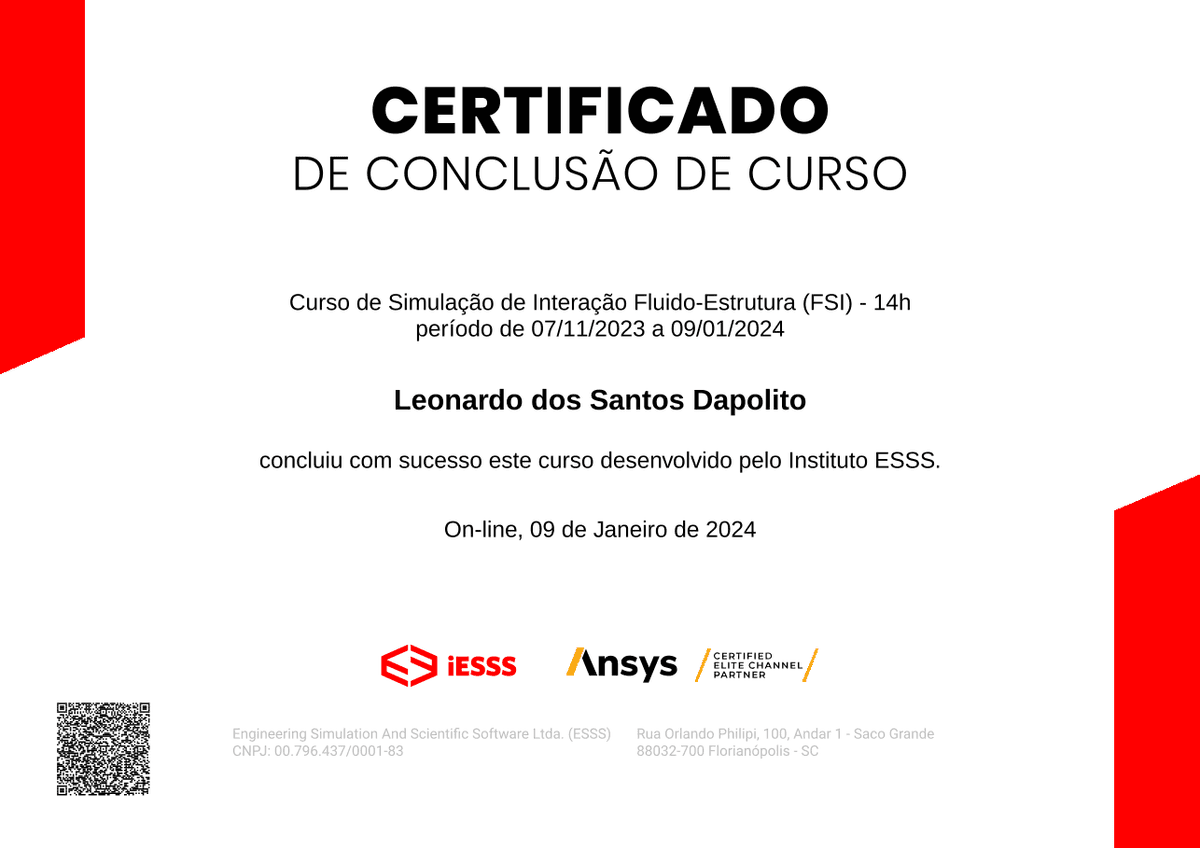
But everything started earlier: with the CFD and FEA specialisation from the ESSS Institute, an opportunity made possible through Formula SAE and one that greatly strengthened my desire to pursue advanced studies. In this specialisation, I completed nine courses using ANSYS software, applying simulations of many different natures, including Fluid–Structure Interaction, porous-media flow, multiphysics, multiphase problems, and several others. It was a comprehensive programme that provided a solid foundation for professional work in the field. This experience allowed me to elevate the quality of my simulations, achieving results increasingly close to reality in CFD and significantly reducing numerical errors in Finite Element analyses, especially in composite structures.